
What is Phlebotomy?
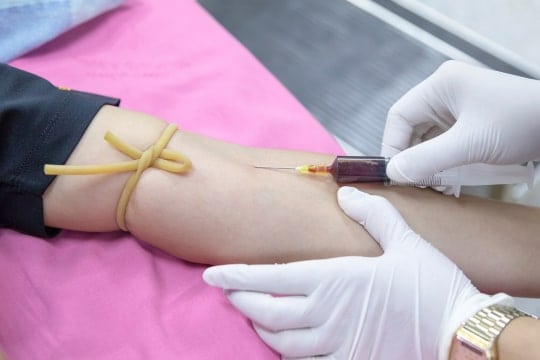
On some occasions, blood is drawn for treating certain medical conditions. This procedure is called "therapeutic phlebotomy". Its purpose is to remove excess or odd-shaped red blood cells and excess iron in the blood.
WHAT TO EXPECT DURING PHLEBOTOMY?
For the patient, some tests may require you to fast hours before the scheduled session. Your physician should give you instructions beforehand.
The procedure can be done while you're sitting or lying down. You'll then be asked to make a fist with your hand, and a tourniquet will be tied around your upper arm. This will make your veins more apparent, making it easier to insert the needle in the right place.
You may feel a small sting when the needle goes into your arm. Your blood will be drawn through a needle, into a small tube, and eventually to a test tube or a bag. For a test, it will usually take 2-3 minutes to draw enough blood.
The needle will be removed when the phlebotomist obtained the necessary amount of blood for testing. They will then remove the tourniquet and bandage the area. You may be asked to press down on the gauze for a few minutes until the bleeding stops.
WHAT'S EXPECTED FROM A PHLEBOTOMIST?
Once identity is confirmed, the phlebotomist must understand the purpose of the blood draw so they take only the necessary amount of blood.
Phlebotomists are expected to be friendly, approachable, and sympathetic. Some people become weak at the sight of blood, and it's the phlebotomist's responsibility to handle these situations well.
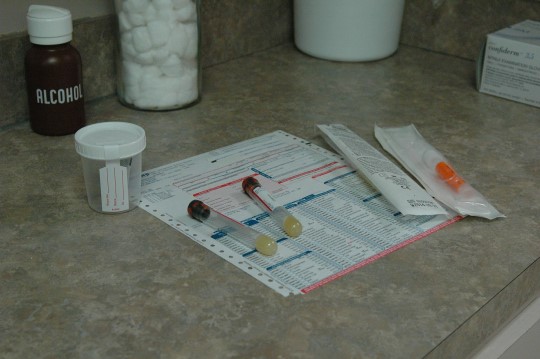
When blood has been drawn, the phlebotomist must correctly label the samples. They also have to ensure that the right tests are done so that the results will be accurate.
BENEFITS OF PHLEBOTOMY
Treating Specific Blood Conditions
Stimulates The Red Blood Cell Production
Lessens The Workload Of The Spleen
Improves Overall Body Condition
do you need your blood tested for diseases or Illnesses?
At the Right Spinal Clinic, our phlebotomy test is done efficiently and accurately by a healthcare professional to help you get the right diagnosis for your condition.
SCHEDULE AN APPOINTMENT
FAQ's
Phlebotomy Frequently Asked Questions
Phlebotomy is usually a very safe procedure, with very low chances of side effects or any risks. However, there have been rare incidents where the patients have incurred nerve damage, vasovagal reaction, and infections after the procedure.
Like all medical procedures and operations, phlebotomy services must be performed using proper procedures to maintain patient safety and preserve venous integrity to avoid accidents or injuries.
Quality assurance regarding the equipment and the medical professionals is key for the prevention of infections, mishaps, and patient safety. The main points for quality assurance during phlebotomy are education and training, maintenance of the standard operating procedures, and proper identification of the patient.
Once the blood draw site is determined, you'll want to gather the necessary supplies. Some healthcare facilities have pre-made kits, while others will require you to retrieve the kit yourself. Taking an extra set of supplies into the exam room is a good idea as you might need to perform more than one procedure.
The suitable sites for venipuncture are the veins in the antecubital fossa: the cephalic, basilic, and median cubital veins. An ideal vein will be 'bouncy' to the touch, have no pulse, and refill when depressed.
There are quite a few tests to be performed on each sample. While some are tests used for large-scale blood donation, other tests are used by doctors and physicians to determine which illness is plaguing their patients. The requisition form will state what lab work is to be performed.
Hematoma, allergy, hyperventilation, air embolism, anemia, and thrombosis are some of the most common complications occasionally caused by phlebotomy services or blood draws.
OUR LATEST LABORATORY TESTS
DISCOVERING THE CAUSE OF YOUR PROBLEMS WITH THE LATEST TECHNOLOGY SCIENCE CAN OFFER

Phlebotomy